From the milk we pour in our morning coffee to the eggs in our breakfast and the meat on our dinner plates, livestock and poultry farming plays an essential role in global food systems. Beyond nutrition, it supports rural livelihoods, generates income, and contributes to national economies.
In this blog, we’ll explore the importance of livestock and poultry farming, key production systems, modern challenges, and how the industry is evolving to meet rising demand sustainably.
1. What is Livestock & Poultry Farming?
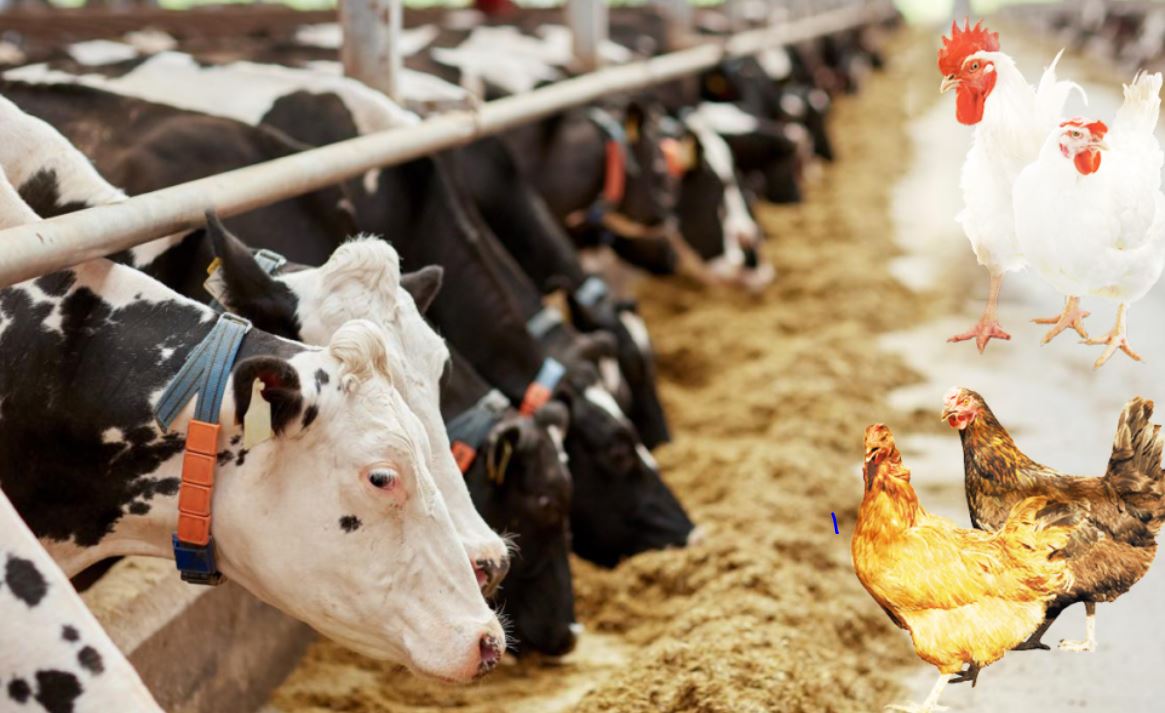
Livestock farming involves the breeding and raising of animals for meat, milk, leather, wool, and labor. Common livestock includes:
-
🐄 Cattle (for milk, beef, leather)
-
🐃 Buffalo (primarily for milk in many Asian countries)
-
🐑 Sheep (meat and wool)
-
🐐 Goats (milk and meat)
-
🐖 Pigs (pork and leather)
Poultry farming refers to the raising of domesticated birds such as:
-
🐔 Chickens (for meat and eggs)
-
🦃 Turkeys
-
🦆 Ducks
-
🕊️ Pigeons and quail (in some cultures)
These animals are raised either for commercial production or subsistence farming in rural areas.
2. Importance of Livestock and Poultry
🍗 Nutritional Security
Meat, eggs, and milk are rich in proteins, vitamins, and minerals — vital for human development and public health.
👩🌾 Rural Employment & Income
Millions of small-scale farmers, especially women, rely on livestock and poultry for daily income.
🌱 Agricultural Integration
Livestock provides manure for crop farming and uses agricultural byproducts as feed — creating a closed-loop system.
💼 Economic Contribution
Livestock contributes significantly to GDP in many developing countries and supports large industries like dairy, meat processing, and leather.
3. Types of Production Systems
🔹 Extensive Systems
Animals graze on natural pastures; low input, low output — common in rural and tribal areas.
🔹 Intensive Systems
High-density housing, commercial feeds, and modern veterinary care; high output — used in large-scale operations.
🔹 Semi-intensive Systems
A mix of both — animals graze but are also given supplemental feed and care.
4. Common Challenges in Livestock & Poultry Farming
❌ Disease Outbreaks
Foot-and-mouth disease, avian flu, and swine fever can devastate farms and economies.
🌍 Climate Change
Heat stress, water shortages, and feed crop failures affect animal health and productivity.
💉 Lack of Veterinary Access
In remote areas, limited access to health services leads to high mortality rates.
🍽️ Feed Shortages & Rising Costs
Feed accounts for up to 70% of production costs — price fluctuations can hurt profitability.
⚖️ Animal Welfare & Biosecurity Concerns
Consumers are increasingly concerned about how animals are raised, treated, and transported.
5. Sustainable Practices in Livestock & Poultry
✅ Improved Breeding Programs
Genetic selection for disease resistance and productivity.
✅ Better Housing & Sanitation
Reduces disease transmission and improves animal welfare.
✅ Efficient Feed Management
Use of crop residues, silage, and balanced rations to reduce costs and waste.
✅ Veterinary Outreach & Vaccination
Regular health checkups and disease prevention programs.
✅ Waste Management
Biogas production from manure, composting, and reducing runoff pollution.
6. Innovations Shaping the Future
🧬 Precision Livestock Farming (PLF)
Sensors, wearables, and cameras monitor animal health, feed intake, and productivity in real time.
📊 Data Analytics
Farmers use apps and AI tools to optimize breeding, feeding, and marketing strategies.
🌱 Alternative Proteins & Sustainable Feed
Insect protein, algae, and fermented feeds are emerging as eco-friendly options.
🌍 Climate-Resilient Breeds
Development of breeds that thrive in hot, dry, or disease-prone environments.
Conclusion
Livestock and poultry farming is more than just food production — it is a cornerstone of rural life, economic stability, and global nutrition. As the demand for animal products rises, the focus must shift to sustainable, ethical, and resilient practices that balance productivity with planet health.
🐄 Healthy animals. Healthy people. A healthy planet.
Want to Learn More?
Stay tuned for our next blog: “Top 10 Tips to Start a Profitable Poultry Farm.” Or download our free guide: “Livestock Management for Smallholder Farmers.”